
Google Develops Biologically Grounded AI for Autonomous Wet Labs
Key Summary
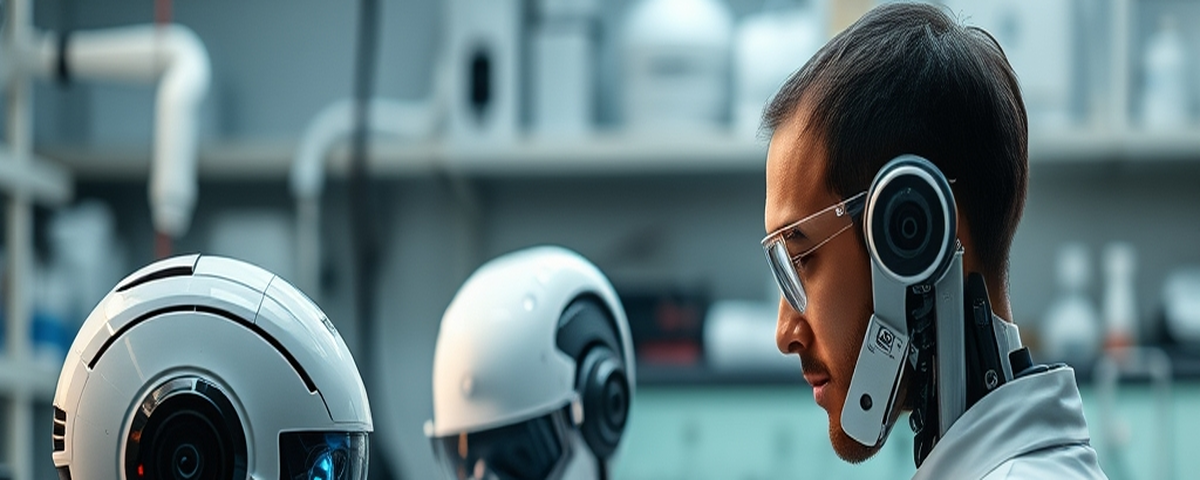
Google Research is exploring the development of biologically grounded AI for autonomous wet labs, where AI agents design experiments, run them on physical robotics, and analyze results. The goal is to create AI that learns from real-world experiments, not just simulations. Google's VERID framework supports three core functions: querying, simulation, and protocol execution. The project aims to improve hit rates and reduce costs in early-stage exploration, but also raises questions about oversight and error handling.
Precedent & Market Context
Google's exploration of biologically grounded AI for autonomous wet labs is part of the company's broader efforts to advance AI safety and user satisfaction. The company's AI safety-focused laboratory has been making strides in AI model leadership and user satisfaction, and its projected compute capacity of 9.5 gigawatts by the end of 2027 is a significant milestone in its efforts to advance AI safety.
Building Blocks for Autonomous Wet Labs
Google Research is trying to close the gap between AI models and biology. In a blog post dated October 16, 2026, the team laid out building blocks for autonomous wet labs, where AI agents design experiments, run them on physical robotics, read the results, and try again.
VERID Framework
The centerpiece is a framework called VERID, short for VERified Infrastructure for Discovery Laboratories. Google describes it as a semantic digital twin of the lab. According to Google, VERID supports three core functions: agents can query the system to inspect its state, run time-compressed simulations, and execute protocols safely on physical hardware.
First Round Results
The first round did not go well. Out of 167 candidates tested, none hit, for a success rate of 0%. However, by the third iteration, the agents landed 131 hits out of 311 tested, a hit rate of 42.1%.
Aptamer Work
Google frames DNA aptamers as a low-cost, high-throughput sandbox, a place where agents can fail quickly and inexpensively while the methods mature. The team then moved to harder targets. Using de-novo protein design, meaning proteins built from scratch rather than adapted from nature, the agents produced binders for cancer-related proteins with single-digit nanomolar binding affinities.
Why Simulations Alone Keep Falling Short
The project targets a stubborn problem in computational biology. Predictions made in silico, on a computer, often fail to survive contact with the wet lab. Real experiments come with measurement errors, contamination, temperature drift, and variables nobody thought to model.
If agents can run tight design-test-refine loops at $1 to $3 per candidate and improve hit rates this quickly, the cost of early-stage exploration could fall. However, the jump from DNA aptamers to complex protein therapeutics is not trivial. Strong binding affinity is also only one early hurdle. A molecule that grips a cancer protein tightly still has to prove it is safe, stable, and effective in living systems.
Conclusion
Google's emphasis on safe protocol execution acknowledges that letting AI agents control physical lab equipment raises new questions about oversight and error handling.