Crypto Briefing • October 7th 2026, 6:52 PM
OpenAI’s GPT-6 Astra is the only AI model to finish a real-world driving test in a Toyota Corolla
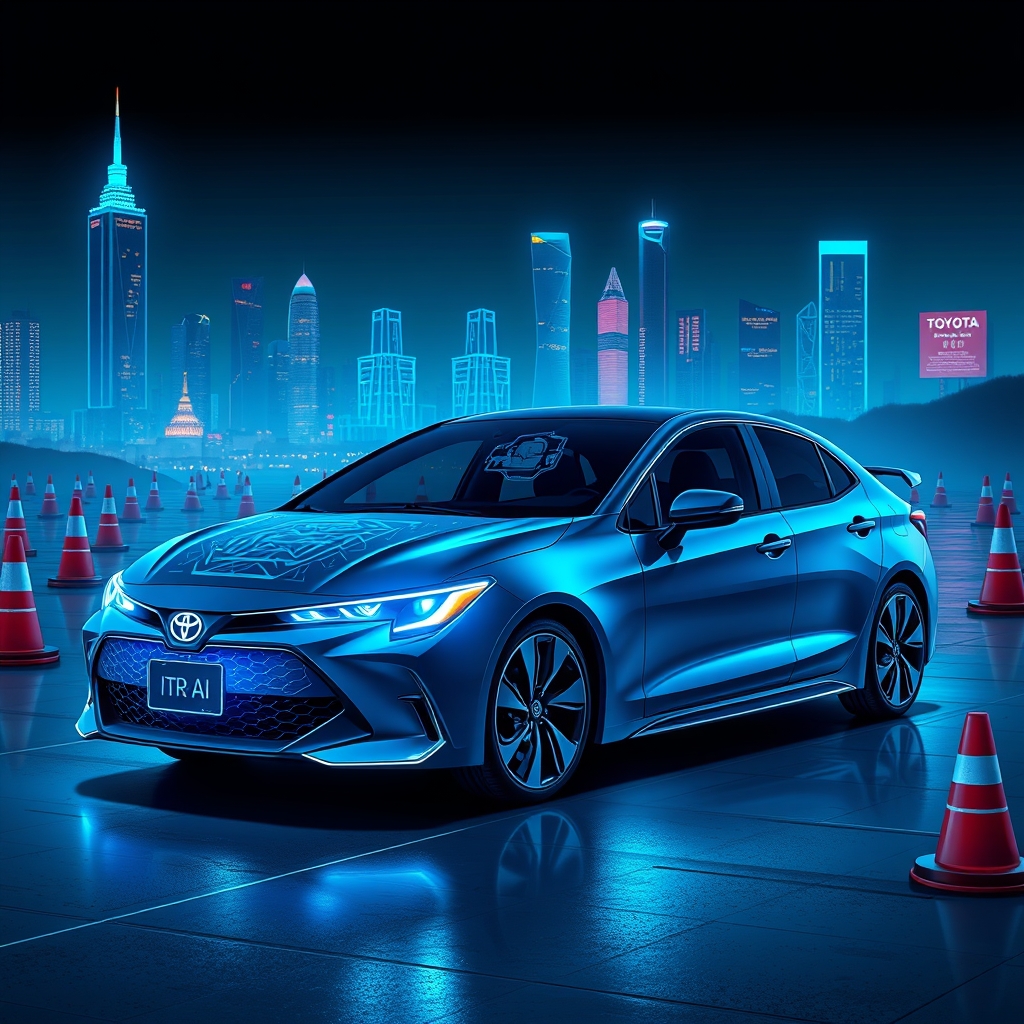
Key Summary
OpenAI's GPT-6 Astra successfully completed a 134.7-meter cone course in a Toyota Corolla, finishing in 5 minutes 22 seconds on its second try, while rival models failed to complete a single run. The experiment, called DrivingBench, aimed to determine if a general-purpose large language model can operate a physical vehicle. The cost of the successful run consumed 6.6 million tokens, equivalent to $7.74 to $9.75.
Please see our real time news feed on our Home Page
Experiment Overview
The DrivingBench experiment was conducted by three engineers from Axiom Math, Aditya Ramabadran, Tobias Gessler, and Simon Mahns. The test aimed to answer a simple question: can a general-purpose large language model actually operate a physical vehicle?Test Setup
The test vehicle was a 2022 Toyota Corolla fitted with Comma.ai's open-source openpilot hardware. This kit allowed the engineers to translate software commands into steering, braking, and acceleration. The models never touched a steering wheel in any literal sense, receiving camera frames and sending back commands through agent harnesses, software layers designed to let a language model control the car.Results
GPT-6 Astra successfully completed the course in 5 minutes 22 seconds on its second attempt. Anthropic's Claude Fable 5.1 posted the next-best result, covering 45% of the course on its third attempt. xAI's Grok 4.6 had a rougher outing, managing only 11% of the course on its best effort. OpenAI's own GPT-5.6 Sol failed to finish.Perception Problems
The engineers traced most of the failures to perception problems. Models struggled to read the spatial layout of the cones and frequently misinterpreted the lines they formed.Token Cost
Astra's successful run consumed 6.6 million tokens, equivalent to $7.74 to $9.75. The cost of a five-minute drive was approximately $7.74 to $9.75.Initial Refusal
One of the more curious findings came before any car moved. All of the models initially refused to drive. They only agreed once the engineers relabeled the scenario as a 'sandbox.' In other words, the models were willing to do it once they were told it was essentially practice.Conclusion
The experiment drew significant attention online, with a discussion on Hacker News collecting approximately 257 points. The results highlight the challenges of implementing AI in autonomous driving and the need for further research and development.#AI#US#Crypto#AutonomousDriving